- Sector:
- Water and Wastewater
- Client:
- Anglian Water
- Main Contractor:
- Jn Bentley
- Location:
- Peterborough
Contact usTo hear about our experiences and how we can help you.
Project Overview
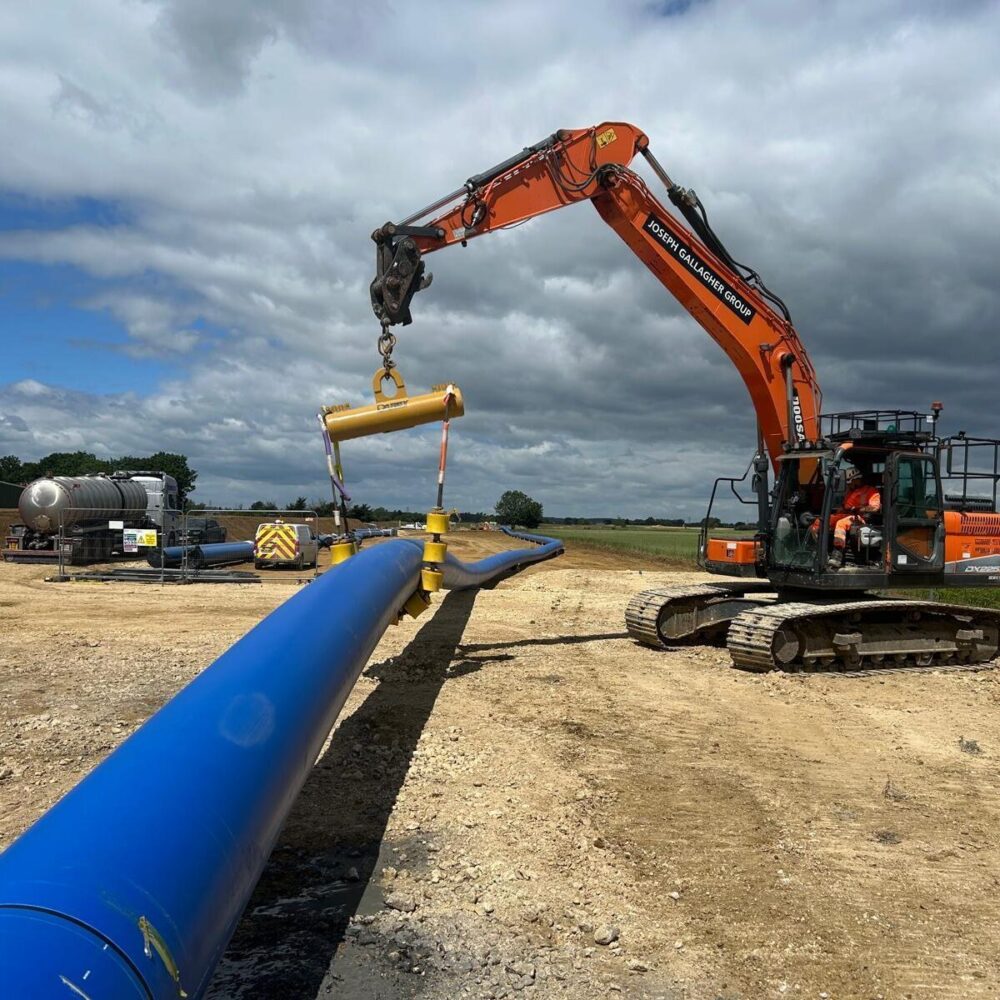
JGL was contracted by JN Bentley to support the design and installation of a new 710mm diameter clean water main and 160mm communications duct as part of the Strategic Pipeline Alliance (SPA) infrastructure programme for Anglian Water. The project involved a series of Horizontal Directional Drilling (HDD) crossings ranging from 160m to 850m in length, with a combined drilled distance of 2,035m.
The HDD crossings were completed beneath a range of significant obstacles, including A roads, B roads, three C roads, a Site of Special Scientific Interest (SSSI), a river, a large diameter gas main, and various ponds and watercourses. The trenchless installation method enabled these crossings to be completed while minimising surface disruption and reducing impacts on surrounding infrastructure and environmentally sensitive areas.
The pipeline was connected using butt fusion welding to PE100 SDR11 pipework. Ground conditions along the route comprised strong limestone and soft mudstone bedrock formations, overlain by superficial deposits of river terrace gravels and clay formations, creating varying geological conditions that required careful planning and engineering throughout the delivery of the works.
Collaborative Design Approach
JGL’s design team in Leeds worked closely with construction teams to develop safe, practical and cost-effective installation solutions. Design and site teams collaborated throughout the project, enabling the progression of crossing designs while construction activities were ongoing. This integrated approach allowed lessons learned from earlier crossings to be incorporated into subsequent designs, reducing the need for design variations and minimising additional costs to the client.
Challenges
The project presented several design and construction challenges. One of the key considerations was the granular nature of the superficial geology, which consisted predominantly of river terrace gravel deposits. These ground conditions posed a risk to the stability of the HDD bore during pilot drilling and increased the potential for frac-out. To mitigate these risks, a steel casing was incorporated into the pilot drilling process. Once installed, the casing allowed the bore to be flushed clean, creating a guide for the HDD tool to steer accurately through each crossing. An additional challenge arose at the River Glen crossing, where an unexpected bore closure prevented continued use of the pilot hole. Construction activities were temporarily suspended to protect product pipe integrity. A larger drilling rig was subsequently deployed to swab the HDD bore and ream it to a larger diameter, allowing the installation to proceed safely.
The Outcome
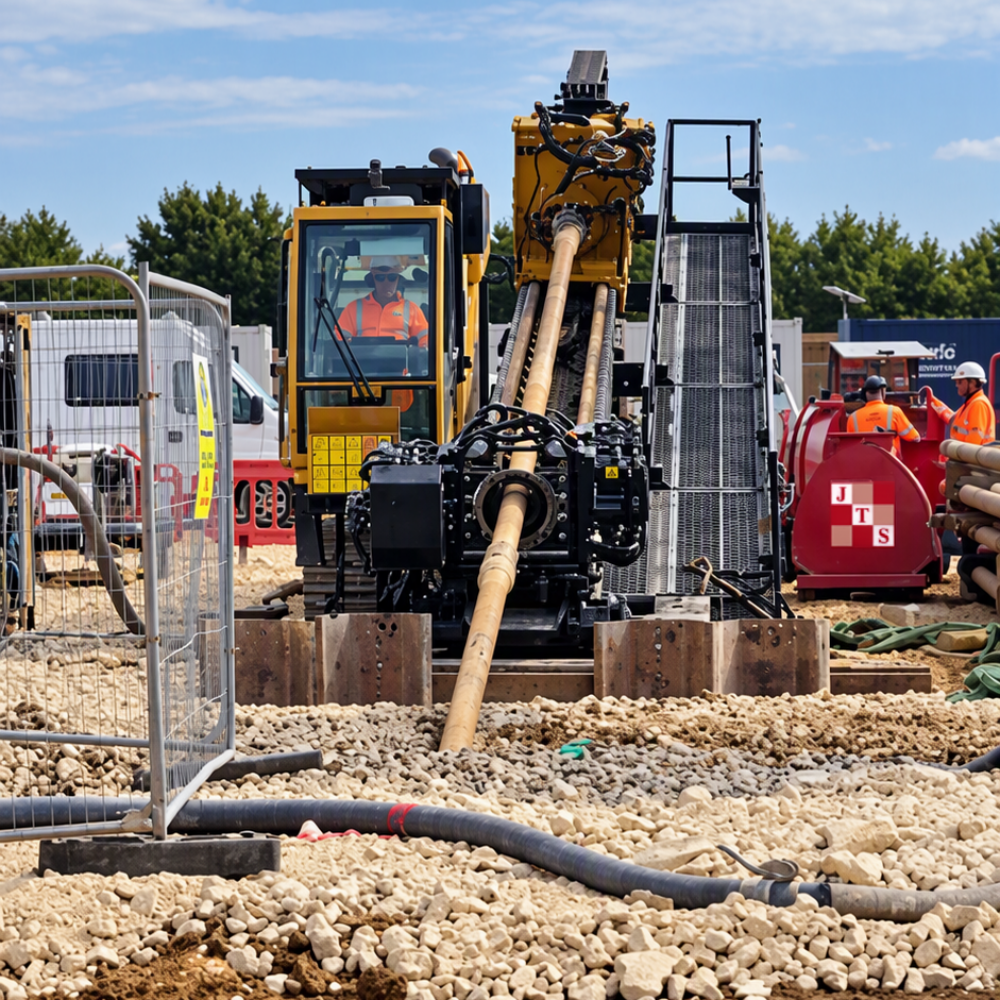
The project successfully delivered six HDD crossings, with individual installation lengths ranging from 160m to 850m. To address the varying ground conditions encountered across the route, a combination of 55-tonne American Auger and Vermeer Maxi drilling rigs was utilised, ensuring that the most effective solution was applied to each crossing location.
Despite challenging geology, including mudstone, gravels and sands, the team successfully completed the crossings safely and efficiently through careful planning, technical expertise and strong collaboration between design and construction teams.


To hear about our experiences and how we can help you.
Explore related content
Tunnelling and Underground Works

Services
Specialists in tunnelling and underground engineering, delivering safe, precise excavation, ground support, and subsurface infrastructure solutions.
Design and Engineering

Services
Experts in specialist plant and equipment providing safe deployment, operation, and maintenance of advanced machinery for complex infrastructure works
Specialist Plant and Equipment

Services
SPA and NRC are experts in lifting and plant solutions, providing safe, precise deployment, operation and maintenance of advanced machinery.
Labour Supply

Services
Delivering skilled, safe, and precise workforce solutions for complex construction, tunnelling, and infrastructure projects.
Ground Improvement and Enabling Works

Services
Specialists in ground improvement and enabling works, delivering safe site preparation, remediation, utilities, drainage and construction readiness.