Joseph Gallagher were appointed by the main contractor, BAM Nuttall, to deliver a package of works requiring the installation of a new UTX (Under Track Utility Crossing) pipeline. This was essential to enable the temporary diversion of utilities prior to construction of the new bridge. The works formed part of the A9 improvements - the principal rail connection in and out of the North Scotland. Our in-house design services were used for the UTX crossing design and application process. Critical changes to the proposed size of pipeline were required, to adapt to challenging ground conditions, which became apparent after mobilisation.
Challenges
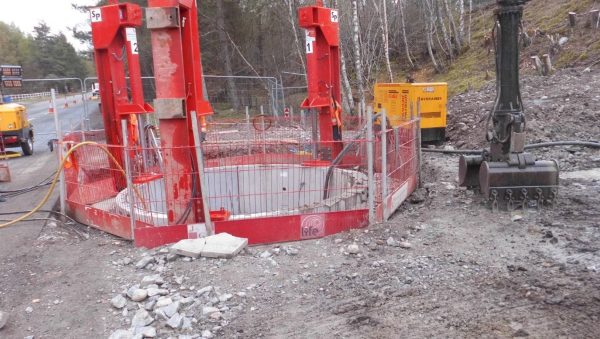
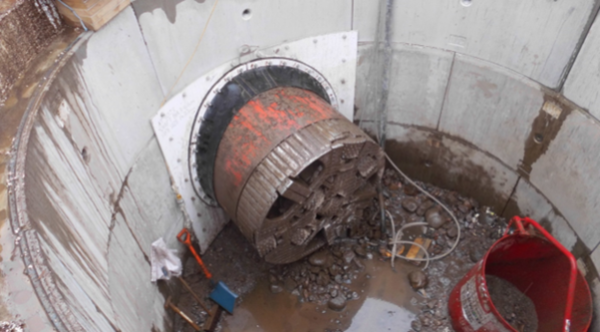
The fundamental challenge on this project was the existing ground conditions. We had supplied design and delivery solutions based on the usage of a standard TBM. However, after mobilising on site and constructing the drive and reception pit/shaft, we were exposed to very hard boulders in the shaft and tunnel horizon, raising concerns on the TBM suitability to the existing ground to be tunnelled through. As a result we overcame this with our sister company being able to rapidly send a TCS 1200 to the site from their base in Northampton, within 2 days. We instructed our in-house design team to step in and urgently re-design a solution without compromising the programme.
The excavation shaft was between the railway and local road caused challenges of its own, however most of the major works we consciously scheduled to take part during less busier times of the day. Traffic Management and Pedestrian Management Plans were drawn up with BAM and implemented successfully to ensure the public safety and access were prioritised. The location of the site itself was remote from our subsidiary firms so it was integral for the PM to build in delivery and logistical time factors into the programme to minimise impact to a critical programme set by National Rail.
Added Value
Our nationwide capability offered BAM a single source procurement route for the design and build of the UTX, taking ownership and minimising any risk between the design and construction phases. Adding to this was our internal design team working closely with our operational delivery team to undertake the Network Rail asset standard F001, 002, 003 detailed design and obtain approval on time to commence the works. Internal access of our Group subsidiary Iseki Microtunnelling allowed tunnelling plant allowed quick replacement of the TBM and tunnelling equipment when unforeseen ground conditions were encountered.